Showing posts with label student writing. Show all posts

Tuesday, March 15, 2011

Stories about food


One of my favorite pieces of writing, one that I have gone back to time and again over the years, is a cookbook published by the H.P. Hood Dairy in the 1940s. My copy is so old and tattered it begins on page ten.

What I love about this cookbook are the stories that are told by contributors and accompany each recipe. For example Mrs. James B. Sherman of Arlington, Massachusetts writes of the buckwheat griddle cakes:

"It would be worth getting up in a room so cold water froze in the glass to once again run downstairs to a breakfast of genuine old-fashioned buckwheat griddle cakes, with maple syrup, made from batter that had been rising while we slept. My Aunt. who is entering her 80th year, says she had them for breakfast 'on the farm' as far back as she can remember."

"...so cold water froze in the glass..." I would like to have known Mrs. Sherman and heard more of her stories. We all have stories about food experiences. Food ties us to family ("my aunt who is entering her 80th year"), food ties us to culture.

In my family in rural Maine we had a large garden and summertime was pickle-making time. I grew up with the sweet, vinegary, spicy smells of fresh-made pickles. And when our children were young and we went back to Maine they were part of pickle-making too. Food experiences become stories, or poems.

Our daughter Sarah (www.sarah.busse.com; www.versewisconsin.com), now a poet and pickle maker has said I can share her poem of pickle making.

Billy Mills's Bread and Butter Pickles

Plunge glass jars into clean hot water and soap.

(Wash the world, wash the weary feet of the traveler.)

Then scrub the cukes in cold and towel dry.

Slice onions thin. For accent pick a pepper,

Green or red. Salt it all down with ice.

The brine is vinegar and sugar in equal part,

Mustard and celery seeds, whole studs of clove,

Turmeric for color. Bring to a boil,

But only just.. Turn off the stove. This

Is the secret to keeping them crisp.

A small detail, but crisp is the trick, the unseen

Flick in the wrist, that makes them really good.

Where might love lead, if we were light on our feet?

If we were quick? That’s not our way.

Welcome the traveler, and don’t skip the turmeric.


We all have food stories--stories of special holiday dishes, stories of Friday night traditions, or of special Grandma or Grandpa recipes, stories of fishing, or mushrooming, or growing huge pumpkins.

Food stories are often the beginnings of longer works. And food stories are fun for kids, grownups, readers and writers. Once a month I want to feature food stories--some from picture books, some from cookbooks, some from other authors, some from you, I hope.

Let's eat. Let's write.

Saturday, September 25, 2010

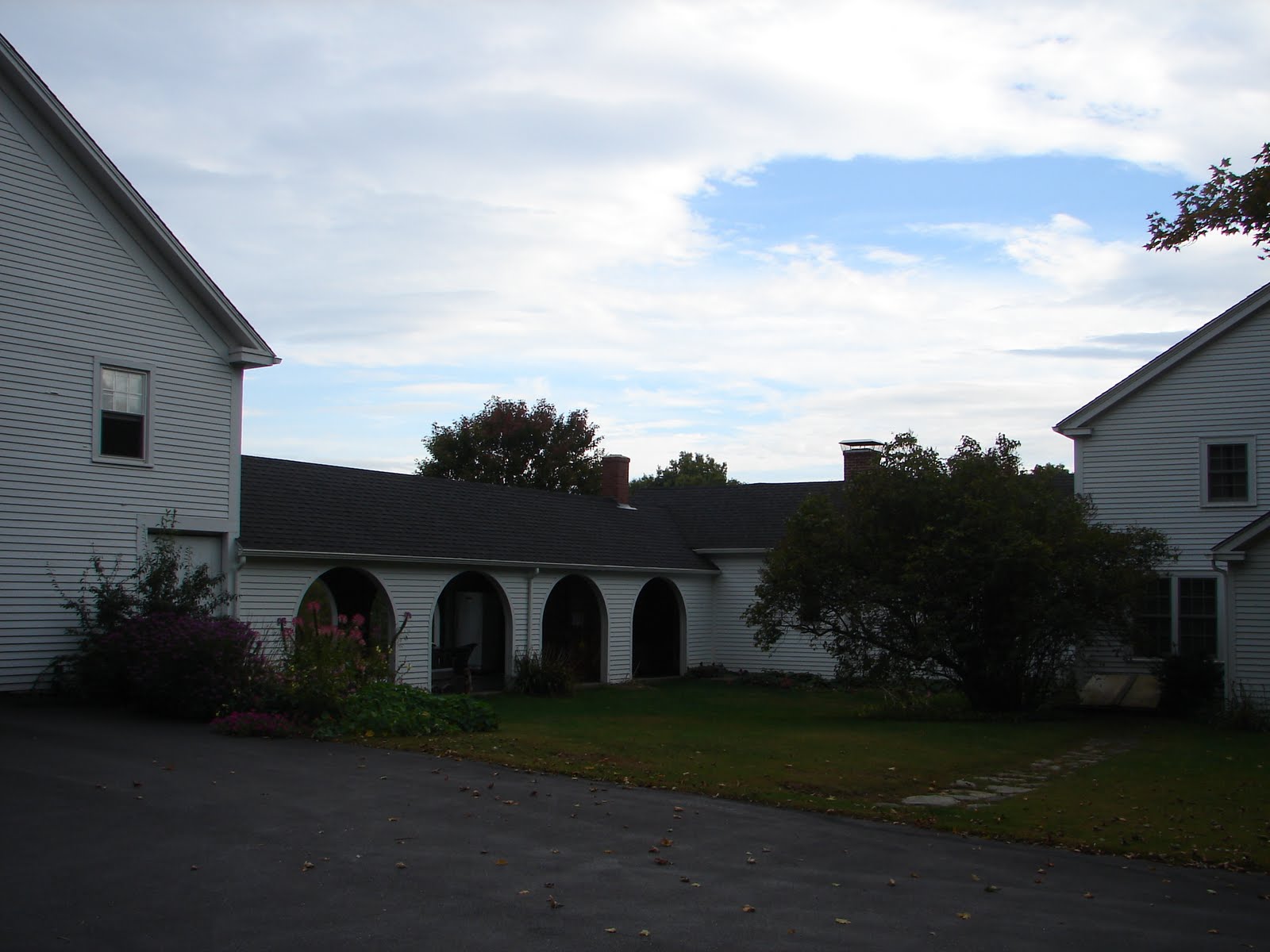
Drama in the Carriage Shed


This week I have been with my mother at my sister Laura and her husband Bruce's place in Maine while Bruce and Laura are away on vacation. Their buildings include a remodeled 18th century farmhouse, carriage shed and barn. My mother likes to walk in the carriage shed for exercise. One afternoon we were out strolling and noticed a caterpillar entangled in a strand of spider web. We broke the web and thought it would crawl away (sorry, Charlotte). On our next round, back by the caterpillar under the chair we noticed that the spider had once again entangled the caterpillar. It hadn't been an accident, but part of the spider's design. We decided that we'd have to let Nature take it's course.

As we walked, we watched the caterpillar struggle against the strand of spider thread, curling and uncurling it's body. The spider continued to wrap its victim until the caterpillar couldn't reach the carriage shed floor. The caterpillar continued to struggle, twisting, turning, in its instinctive attempt to escape. We thought it was doomed. I went into the house--I know it's odd, it was just a caterpillar after all, but I couldn't stand to watch its inevitable end.

A few minutes later my mother yelled in, "He escaped!" Somehow the caterpillar got away. The caterpillar's fate hadn't been inevitable.

Afterward I thought about how caught up my mother and I had both been in the fate of this little worm, of which there are hundreds this time of year. We probably drive cars over them without thinking. We watch bluejays eat them and don't lift a hand. There was nothing special about this one. Why did we care so much about this little character? Was it the struggle? the seeming helplessness of the caterpillar? Was it that we were right there to see it?

I wondered what I could learn from this about writing, how could I make my character's stories more compelling? Does any kind of struggle resonate with readers? We all struggle against something. Is it enough to have characters who have a struggle? who yearn?

Perhaps I need to work to be sure that their struggles are important to them (what's more important than survival?). It would make my work stronger to have a "spider" of some kind in the story, some character or force for my character to struggle against. And I need to bring readers in close so they can be "in the same shed" as my "caterpillar."

Student writers, too, can learn from this caterpillar. When they are writing, they can look to their own lives, what do they want to do? What struggles have they watched? Perhaps it's only a struggle to ride a bicycle, or save money for a new basketball. That's enough. It's the moving toward the goal, whether it's survival, or winning an important race, that draws us in. And we want to feel the heat on the runner's back and the pebbles on the road. We want to be close enough to smell the sweat.

We went back to the Adirondack chairs in the shed the next day. No spider and no caterpillar. They had taken their drama to a different place. But I will think of them whenever I go into the carriage shed, and whenever I'm thinking about plot and character.