Showing posts with label Will Allen. Show all posts

Thursday, September 26, 2013

Inspired by Will Allen--Matthew 25 Urban Farm~Cedar Rapids

Clint Twedt-Ball and his brother Courtney Ball, co-directors of Matthew 25 farm

Good ideas grow like plump seeds dropped in good ground.  Last weekend I had a chance to see that again.

I went to an urban farm in Cedar Rapids--Matthew 25. The farm was inspired by Will Allen and has as its goal the same goal as Will Allen's Growing Power Farm-- to provide tasty, healthy food at reasonable prices to people in the area. The co-directors are Clint Twedt-Ball and his brother Courtney.

Play equipment welcomes neighborhood kids

No fences

Vegetables grow next to train tracks and industrial buildings

Matthew 25 has plans to send one of its farmers to Will Allen's Growing Power Farm this winter, expand its farm next year, grow more vegetables plant more fruit trees. Courtney Ball has worked with others to set up school yard gardens at two schools in Cedar Rapids. 

At a time when there are people in our country who would cut food stamp benefits to those who need them (see Paul Krugman on this), thus depriving children--and adults--of needed food, it is uplifting to meet people who are succeeding at helping others to eat better and are strengthening communities with good food.


Sunday, April 21, 2013

Life on the back porch. Life in the street.

Regular life feels somehow frivolous, undeserved, when friends in Boston have been recently locked inside their homes, waiting for the next round of firing, when we have all witnessed via television, bombs, explosions, shootouts, lives thrown into grief and chaos.

A blog about writing for kids almost feels like playing on the back porch when there's a fire on the street. But our lives are webs, I think, and in that web--along with the fear and sadness and mystery of a desire to maim--are the uplifting qualities of courage, caring, in real life and the buoying, courageous characters found in good books.


So along the journey to good books, to community ...

 In January, Lauren Stringer-- very talented author-illustrator of a new book called When Stravinsky Met Nijinsky-- tagged me for the blog-around-the-world tour called "The Next Big Thing." I quickly said, "oh of course I can do that"--send you a photo of my new book, and brief description and then a short time later, tag others and answer some questions about the book.

Then life intervened with its own here-and-there demands.But today I am "doing that," doing what I said I would do, writing about my new book, coming out in September--Farmer Will Allen and the Growing Table (Readers to Eaters Books). It seems appropriate, even in this tumultuous time, to tell you about Will Allen, because he is a man committed to the goal of giving hungry people everywhere access to good food, to making our world community stronger, in the face of all who would tear it down.

Farmer Will Allen and The Growing Table-2 xs


Questions:

1. What is the title of your new book? Farmer Will Allen and the Growing Table.

2. Where did the idea come from? I was interested in urban farming and when I read of Will Allen and his Milwaukee farm, I knew writing about an urban farmer was the best way to tell the story of an urban farm.

3. What genre does your book fall under? Picture book biography.

4. What actor would you choose to play the part of your character? Danny Glover would be perfect. Will Allen reminds me of Danny Glover.

5. What is a few-sentence synopsis?  When Will Allen was a boy he hated farm work and wanted a "white shirt" job. When he grew up he realized he loved growing things, built a city farm and taught neighbors to help grow good food. But that table wasn't big enough; he wanted to invite more to the table and has worked to build a world-sized table.
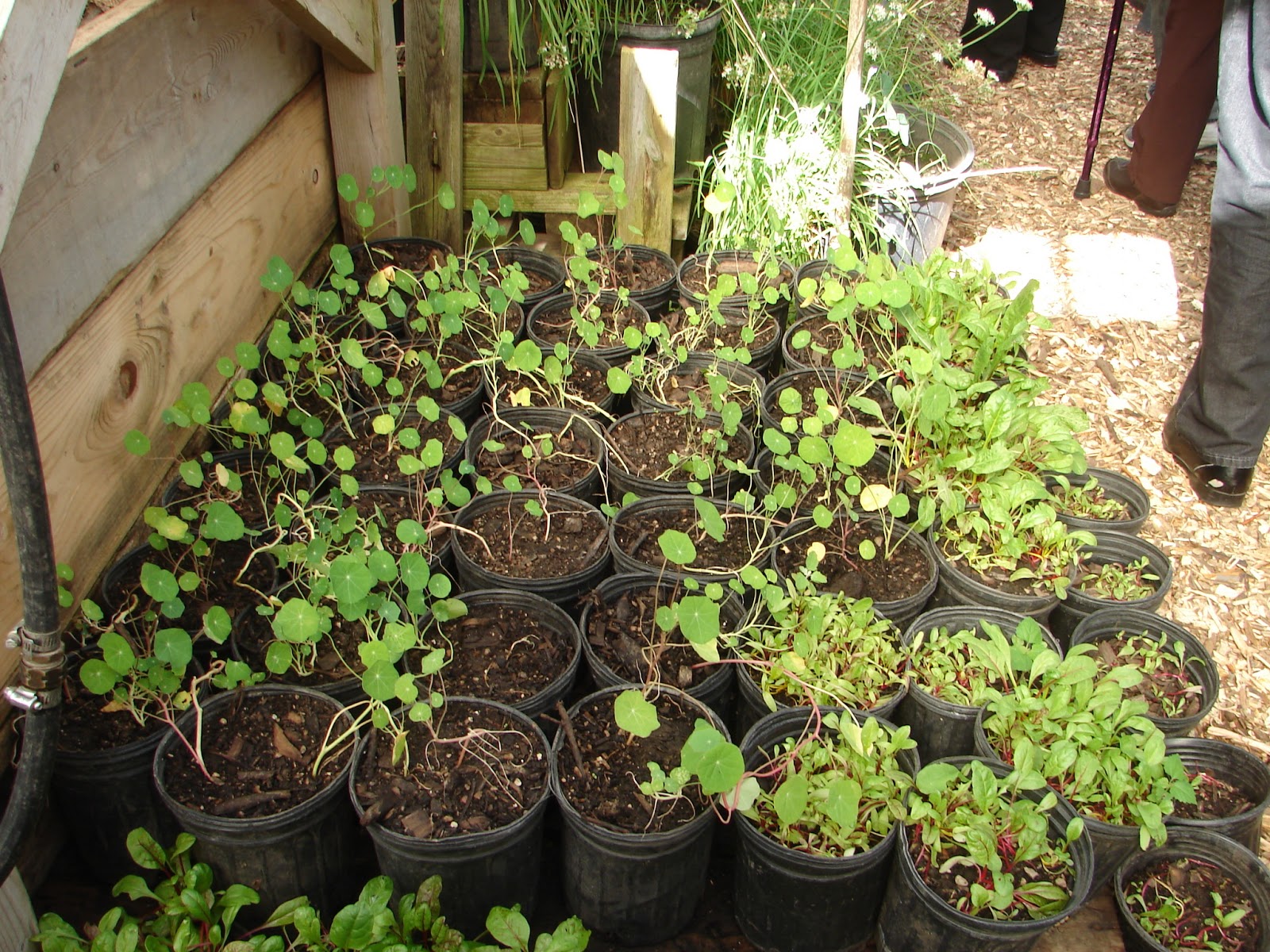
pots and buckets at Will Allen's Growing Power
growing on the ground at Growing Power

6. Who is publishing your book? The very committed Philip Lee of Readers to Eaters Books.

7. How long did it take to write the first draft? The first draft of this book took about five months, but there were several "pre-first" drafts in previous months while I homed in on my real subject.

8. What other books would you compare this story to in your genre?  Possibly The Boy Who Drew Birds: a biography of John James Audubon by Jacqueline Davies  (illustrated by the wonderful Melissa Sweet) because they are both biographies of people with one passion; in the gardening sense White House Kitchen Garden and How It Grew by Robbin Gourley, another story of growing good food.

9. Who or what inspired you to write this book? The actual life and deeds of Will Allen. Many people around the world go to bed each night with good food in their stomachs because of his work.

10. What else about the book might pique a reader's interest?  There's a lot of good stuff about red wiggler worms.

And now I am pleased to tag my friend and fellow-writer Jane Kurtz and her lively Anna, of Anna Was Here:


Anna knows she will be fine in her temporary move to Kansas.  After all, she gets
gold ribbons for always being prepared.  And it's her first chance to meet cousins
and aunts and great aunts where her grandma grew up.  The Great Plains has always
held huge challenges for people, though, and she finds herself in the middle of
disasters too big for any nine-year-old girl asking "Who's in charge here, anyway??"
 Anna discovers a lot about what we cling to when everything is out of control. 
 
More from Jane soon.
 
More here, soon, about writing, gardening, finding stories, telling stories. 

Tuesday, February 19, 2013

Wry revision, er... Revision and Rye...Rye and Revision


Laura's place on a snowy day
Last week I was in Maine, visiting with my sisters Laura and Audrey and my mother. We had a great time cooking, sewing, laughing, remembering, listening to Team of Rivals.

Part of the cooking was me making rye bread flavored with pickle juice. I'd tried it once before and found it perfectly rye and sour. And this time I decided why waste a jar of pickles when I could just as easily use vinegar seasoned with pickling spices. Hmmm....

Not every idea is a good one. Not every revision works.

"stunning" rye


The vinegar totally killed the yeast. The defeated loaf shrank in on itself after I took it out of the oven. The bread had no crumb. It was sour.  It was solid, quite like cement, something you might keep on hand to stun a burglar.

So I had to revise my revision of the recipe and try again.


Revised version was worthy of reuben sandwiches, which were indeed stunning.

This whole wry episode reminded me of a revising experience I had recently. I've written a picture book biography of Will Allen which will be coming out this fall, published by Readers to Eaters, and illustrated by Eric Larkin. I have thought for some months that I had done all I could do with this manuscript, that it was indeed done.

I'm excited about telling Will Allen's urban farming story and excited to see what Eric Larkin will do with the text. So when I was visiting the College Community Schools in Cedar Rapids a couple of weeks ago I decided to read this story to one group of students.  I quickly realized that the manuscript was too long--not because the kids were jumping out the windows, but because it sounded clunky to my ear. It had no lightness, no smoothness. The sentences seemed stuttery to me, containing three verbs when one would do. I knew I'd have to revise.

But the funny thing is that I had read this story just recently to an audience of adults and hadn't caught the clunkiness. Why did I catch it with the kids? I'm not sure.

I cut about 300 words. The initial part of the work was done in the United Airlines lounge at O'Hare--a new place to me, with gray carpets, gray sky, nothing to focus on but my work. It was a lot easier to see the story I wanted and to pare away what I didn't want in this neutral, non-stimulating space. I was astonished at how I could sit in my chair and think about only what I wanted this manuscript to be.

There are several things I've learned from this experience.

1. we are never really done
2. read your story out loud to its real audience before you call it done
3. to see a story anew, sometimes it helps to work in a new place
4. there's something to be learned from not-quite-done stories, something to be done with bad bread